
Marvel: Ultimate Alliance – Game Overview & Guide
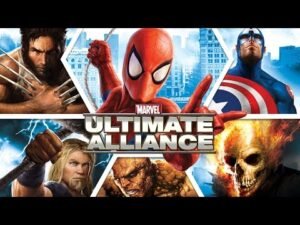 Marvel: Ultimate Alliance is a 2006 action role-playing game developed by Raven Software and published by Activision. Set in the expansive Marvel universe, the game brings together dozens of iconic heroes and villains in a large-scale crossover storyline.
The game is designed around team-based combat, allowing players to assemble squads of superheroes and switch between them during missions. With its mix of action, RPG progression, and cooperative gameplay, it quickly became a standout superhero title of its era.
At its core, Marvel: Ultimate Alliance focuses on teamwork, customization, and exploring one of the most recognizable comic book universes in gaming.
Story and Setting
The narrative of Marvel: Ultimate Alliance begins when the villainous organization known as the Masters of Evil launches a massive attack against S.H.I.E.L.D., forcing Nick Fury to assemble a global team of superheroes.
Players travel across multiple iconic locations from the Marvel universe, including Asgard, Atlantis, and various S.H.I.E.L.D. bases. Each environment introduces different enemies, challenges, and story arcs tied to Marvel lore.
The central conflict revolves around Doctor Doom and his alliance with powerful villains who seek to reshape reality through ancient and cosmic forces.
As the story unfolds, players must stop global chaos while uncovering a deeper conspiracy involving mythical artifacts and interdimensional threats.
Publisher and Development Details
Marvel: Ultimate Alliance was developed by Raven Software in collaboration with multiple studios depending on platform versions. It was published globally by Activision, a major publisher known for handling large licensed franchises.
The game is based on the Marvel universe, one of the most influential superhero franchises in entertainment history. This universe includes legendary characters such as Spider-Man, Iron Man, Wolverine, and Captain America, all of whom are playable in the game.
One of the key strengths of the development was its focus on adapting comic book storytelling into an interactive format, allowing players to experience crossover events typically seen only in comics.
The game also supports both single-player and cooperative multiplayer modes, encouraging team synergy and replayability.
Gameplay Features
The gameplay in Marvel: Ultimate Alliance is built around real-time combat and team management. Players control a squad of four superheroes, each with unique abilities, fighting styles, and upgrade paths.
Each hero belongs to specific archetypes such as melee fighters, ranged attackers, or support characters. This encourages strategic team composition depending on mission objectives.
Players can perform combo attacks, use special abilities, and unlock new powers as they progress. The RPG system allows characters to level up, gain stat improvements, and equip enhanced gear.
One of the standout features is the “Fusion” system, where two heroes can combine their powers to unleash powerful joint attacks. This mechanic adds depth to combat and encourages experimentation with different team combinations.
The game also includes branching dialogue choices in certain moments, allowing players to influence minor narrative outcomes.
Iconic Marvel Roster
A major highlight of Marvel: Ultimate Alliance is its massive roster of playable characters. The game features heroes and villains from across the Marvel universe, including members of the Avengers, X-Men, and Fantastic Four.
Each character is designed with unique abilities that reflect their comic book powers. For example, Wolverine excels in close combat, while Iron Man specializes in ranged energy attacks.
The variety of characters ensures that no two playthroughs feel exactly the same, especially when experimenting with different team builds.
This wide selection of heroes is one of the reasons the game remains popular among Marvel fans and action RPG players.
Release Date and Platforms
Marvel: Ultimate Alliance was released in 2006 across multiple platforms, making it widely accessible to console and PC players.
The game launched on platforms including PlayStation 2, PlayStation 3, Xbox, Xbox 360, Game Boy Advance, Wii, and Microsoft Windows. Later versions and remasters expanded availability to newer systems.
Its multi-platform release helped it reach a broad audience, contributing to its commercial success and long-term popularity.
The game’s cross-generation availability also allowed it to bridge early and modern console eras, making it a recognizable title for many gamers.
Cooperative Gameplay Experience
One of the defining aspects of Marvel: Ultimate Alliance is its cooperative gameplay. Players can team up locally or online (depending on platform) to control different heroes within the same mission.
This cooperative structure enhances replayability and encourages teamwork. Players must coordinate abilities, manage positioning, and combine powers effectively to overcome tougher enemies.
The cooperative design makes the game feel closer to a superhero team experience rather than a single-character action game.
Villains and Boss Battles
The game features a wide range of iconic Marvel villains, including Doctor Doom, Loki, and other major antagonists from the comic universe.
Boss battles are large-scale encounters that often require strategic use of team abilities and environmental awareness. Each boss presents unique mechanics that challenge players to adapt their playstyle.
These encounters serve as key highlights of the game, offering dramatic moments that tie closely to Marvel lore.
Legacy and Impact
Marvel: Ultimate Alliance remains an important title in superhero gaming due to its ambitious crossover concept and strong gameplay foundation.
It helped set the standard for future Marvel-based games by proving that large-scale character rosters and cooperative mechanics could work effectively in an action RPG format.
The game’s success also led to sequels and spiritual successors that continued exploring similar team-based superhero gameplay.
For fans of Marvel: Ultimate Alliance, the game represents a defining moment in superhero gaming, combining action, strategy, and comic book storytelling into one cohesive experience.