
The Incredible Hulk: Ultimate Destruction Review
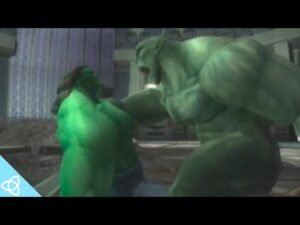 The Incredible Hulk: Ultimate Destruction remains one of the most beloved superhero games ever released. Launching in 2005, the game gave players exactly what they wanted from a Hulk experience: unlimited destruction, massive jumps, brutal combat, and the freedom to smash nearly everything in sight.
Published by Sierra Entertainment and set within the Marvel universe, the game captured the raw power of Hulk better than most superhero titles of its era. Instead of limiting players with narrow levels or scripted action, Ultimate Destruction embraced open environments and chaotic gameplay.
Released in August 2005, the game arrived on PlayStation 2, Xbox, and Nintendo GameCube. At the time, open-world superhero games were still evolving, and The Incredible Hulk: Ultimate Destruction helped push the genre forward by focusing entirely on destruction and player freedom.
What made the game stand out immediately was its sense of scale. Hulk did not feel restrained. Players could leap across entire city blocks, throw vehicles like missiles, destroy military bases, and overpower nearly every enemy that stood in their way.
Even years later, many Marvel fans still consider it one of the best Hulk games ever created.
Story and Setting
The story follows Bruce Banner as he searches for a cure to his gamma mutation while constantly being hunted by military forces and powerful enemies. Along the way, Banner uncovers dangerous conspiracies tied to gamma experiments and encounters several iconic Marvel characters.
Unlike slower or more grounded superhero games, Ultimate Destruction embraces comic-book action from the very beginning. The narrative quickly throws Hulk into explosive battles against giant robots, mutant creatures, military units, and superpowered enemies.
The game’s environments are split into large open-world areas filled with destructible objects and hostile forces. Players travel through cities, deserts, military facilities, and secret laboratories while completing missions tied to the main storyline.
One of the game’s strengths is how naturally the setting supports Hulk’s abilities. Buildings crumble under attacks, vehicles become weapons, and entire streets turn into battle zones within seconds.
At the same time, the story balances action with Bruce Banner’s internal struggle. While Hulk represents unstoppable rage and power, Banner continues searching for peace and control over his condition.
That contrast helps the game feel more connected to the classic Marvel interpretation of the character.
Publisher and Development Details
The Incredible Hulk: Ultimate Destruction was developed by Radical Entertainment and published by Sierra Entertainment. Radical Entertainment became known for creating large-scale action games, and their experience clearly shaped the game’s ambitious design.
The developers focused heavily on movement and destruction mechanics. Their goal was simple: make players truly feel like Hulk. As a result, nearly every system in the game revolves around power, speed, and chaos.
Unlike many licensed superhero games released during the mid-2000s, Ultimate Destruction was not directly tied to a movie adaptation. That decision gave the developers more creative freedom to embrace comic-book storytelling and exaggerated action sequences.
The game also featured contributions from comic-book writers familiar with Marvel characters, which helped preserve the tone and personality of Hulk throughout the adventure.
Another standout aspect was the physics engine. For its time, the level of destruction and environmental interaction felt impressive. Cars could be ripped apart and turned into weapons, walls collapsed during battles, and enemies were launched across huge distances.
The development team clearly prioritized fun over realism, and that approach worked perfectly for a Hulk game.
Gameplay Features
Gameplay is where The Incredible Hulk: Ultimate Destruction truly shines. The game focuses on fast movement, heavy combat, and unrestricted destruction across large environments.
One of the most memorable mechanics is Hulk’s incredible mobility. Players can leap enormous distances, run up walls, and sprint through entire city districts at high speeds. Traversal feels smooth and satisfying, especially compared to many superhero games released during that generation.
Combat is equally over-the-top. Hulk can punch enemies through buildings, smash tanks into pieces, and use environmental objects as improvised weapons. The game constantly encourages creativity during fights.
Players can also unlock devastating special attacks and combos throughout the campaign. These abilities become increasingly powerful as Hulk grows stronger, allowing for even larger-scale destruction later in the game.
One feature fans still remember fondly is the weaponization system. Hulk can transform vehicles into combat tools, including steel fists made from crushed cars or shield-like objects created from debris.
Boss battles also play a major role throughout the adventure. Players face giant enemies, gamma mutants, military superweapons, and iconic Hulk villains in battles that emphasize scale and raw power.
Even though the game focuses heavily on destruction, it still includes mission variety. Some objectives involve escaping military pursuit, protecting civilians, infiltrating facilities, or chasing enemies through massive environments.
The open-world structure helps everything feel dynamic and unpredictable. Chaos can erupt almost anywhere, especially when military forces begin escalating their attacks against Hulk.
Because of this, gameplay rarely feels repetitive despite the game’s heavy emphasis on combat.
Release Date and Platforms
The Incredible Hulk: Ultimate Destruction officially launched in August 2005. The game released on several major platforms of the time, helping it reach a wide audience of superhero fans and action gamers.
The available platforms included:
- PlayStation 2
- Xbox
- Nintendo GameCube
At release, critics praised the game’s destruction mechanics, freedom of movement, and satisfying combat system. Many players appreciated how the game fully embraced Hulk’s power fantasy rather than limiting the character.
Over time, Ultimate Destruction developed a strong cult following among Marvel fans. Its influence can still be seen in later open-world superhero games that focus on traversal and environmental interaction.
Even years after its release, many players continue to revisit the game because few superhero titles have captured pure destructive fun quite the same way.
Its combination of comic-book storytelling, explosive gameplay, and unrestricted chaos helped make it one of the standout Marvel games of the 2000s.